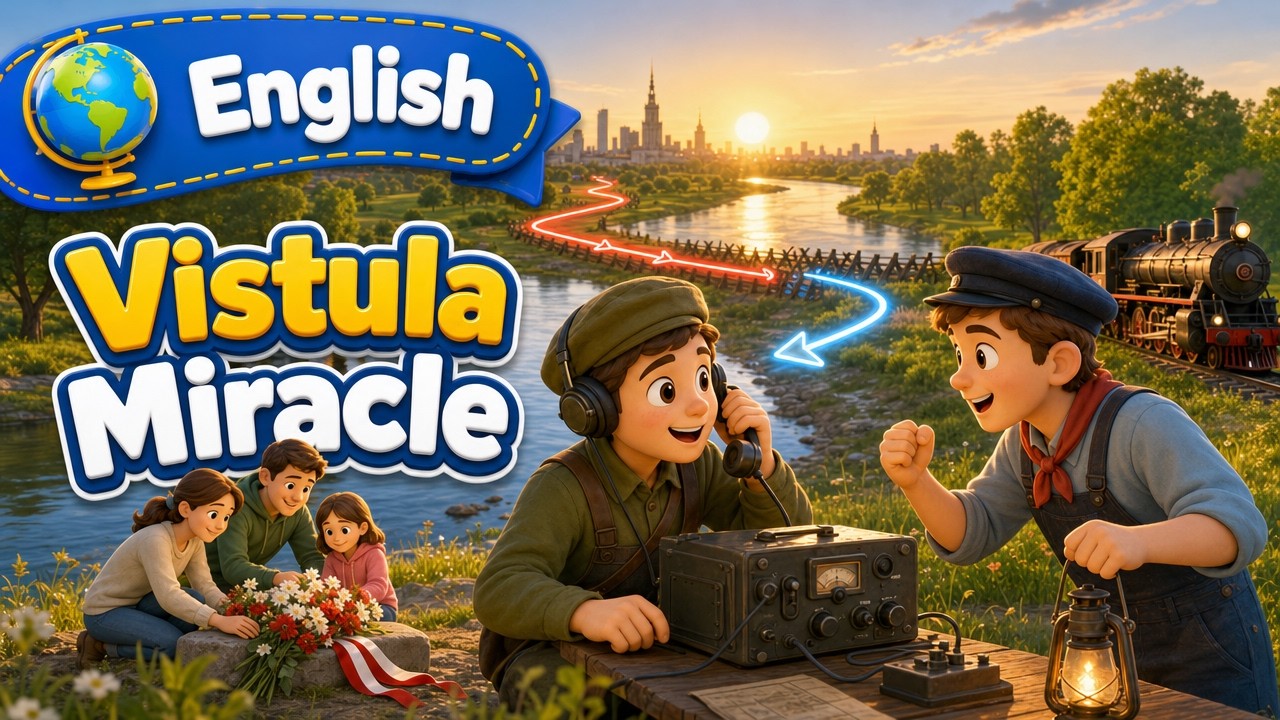
Why was Poland’s August 1920 victory called Cud nad Wisłą—the “Miracle on the Vistula”? This family song follows the defense near Warsaw and the counteroffensive from the Wieprz, explaining how courage, planning, intelligence and shared effort reversed the advance. It also connects the Battle of Warsaw with Poland’s August 15 Armed Forces Day, gratitude for service and responsibility for peace.
Text from the recording’s subtitles.
Song lyrics
Un seul miracle a-t-il sauvé Varsovie ?
Du courage, un bon plan, l'effort de tous !
Cud nad Wisłą, Miracle de la Vistule
Nom d'une victoire soudaine, pas de magie
Quinze août, un signe de mémoire
La bataille de Varsovie changea la marche
La jeune Pologne a défendu sa liberté
Merci aux soldats; préservons la paix
En dix-neuf cent dix-huit, la Pologne fut libre
Après cent vingt-trois ans de partages
Le jeune État bâtissait lois et frontières
En vingt, l'Armée rouge avançait de l'est
Les chefs bolcheviques voulaient pousser la révolution vers l'ouest
Soldats, volontaires et soignants se sont unis
États-majors, rail, radio et codes ont soutenu le plan
Dès le treize: Radzymin, Ossów et la Wkra
Le quinze, la défense reprit Radzymin
Le seize, du Wieprz, ils gagnèrent flanc et arrière
Le repli commença, mais la guerre continua
La magie seule a-t-elle changé la marche ?
Non, les gens, le courage et un bon plan !
Pour beaucoup, la foi apportait l'espoir
Ce brusque repli renforça ce nom
Aujourd'hui, fleurs et drapeaux honorent le service
Quinze août, un signe de mémoire
La bataille de Varsovie changea la marche
La jeune Pologne a défendu sa liberté
Merci aux soldats; préservons la paix
La paix de Riga vint en mars vingt et un
Souvenons-nous : quinze août !
Language version lyrics
Did one miracle save Warsaw?
Courage, a wise plan, and work as one!
Cud nad Wisłą—the Vistula Miracle
Named Warsaw's sudden victory, not magic
August fifteenth, memory's sign
Warsaw's battle turned the marching tide
Young Poland kept its freedom alive
We thank today's soldiers and guard peace
In nineteen-eighteen, Poland rose free
After one hundred twenty-three years of partitions
The young state built its laws and borders
In nineteen-twenty, the Red Army came from east
Bolshevik leaders hoped revolt would move west
Soldiers, volunteers, and medics joined
Staffs, rail, signals, and codebreakers shaped the plan
The thirteenth saw Ossów, Wkra, Radzymin
On the fifteenth, defense regained Radzymin
Next day, from Wieprz, troops struck flank and rear
The retreat began, but the war went on
Did magic alone reverse the march?
No—people, courage, and a sound plan!
For many, faith brought hope as well
That sudden retreat made the name endure
Now flags, flowers, and meetings honor service
August fifteenth, memory's sign
Warsaw's battle turned the marching tide
Young Poland kept its freedom alive
We thank today's soldiers and guard peace
Peace came at Riga in March, twenty-one
We remember—August fifteenth!

 2:28
2:28
