How Does a Solar Eclipse Happen? | Kids’ Educational Song | English audio
Keine bestätigte Aufnahme in der Seitensprache. Das verfügbare Video wird gezeigt.
◷ 3:31
An energetic space-pop song showing how the Sun, Moon, and Earth align to create a solar eclipse. Kids discover partial and total eclipses, the Moon’s moving shadow, and the essential rules for viewing the Sun safely.
Text aus den Untertiteln der Aufnahme.
Liedtext
What sends a racing shadow at noon?
The Sun pours light across our turning Earth.
The nearby Moon moves through our line of sight.
It never touches the faraway Sun.
Three cosmic teammates line up in space.
The Moon slips between the Sun and Earth.
The Sun is far bigger; the nearby Moon looks as big.
Sun, then Moon, then Earth—all in a line.
The Moon blocks sunlight; the Sun still shines.
Its little shadow races over Earth.
That's a solar eclipse in motion.
The Moon's small shadow sweeps across the ground.
It falls on just a narrow patch of Earth.
The Moon moves on; its shadow follows too.
The whole bright solar disk comes back in view.
Full sunlight washes over us again.
Sun, then Moon, then Earth—all in a line.
The Moon blocks sunlight; the Sun still shines.
Its little shadow races over Earth.
That's a solar eclipse in motion.
Partial: the Moon covers part of the Sun.
Total: it briefly covers the whole disk.
Not every new moon—its orbit is tilted.
Use eclipse glasses with a solar filter.
Never look straight at the Sun unprotected.
Regular sunglasses cannot protect your eyes.
Sun, then Moon, then Earth—all in a line.
The Moon blocks sunlight; the Sun still shines.
Its little shadow races over Earth.
That's a solar eclipse in motion.
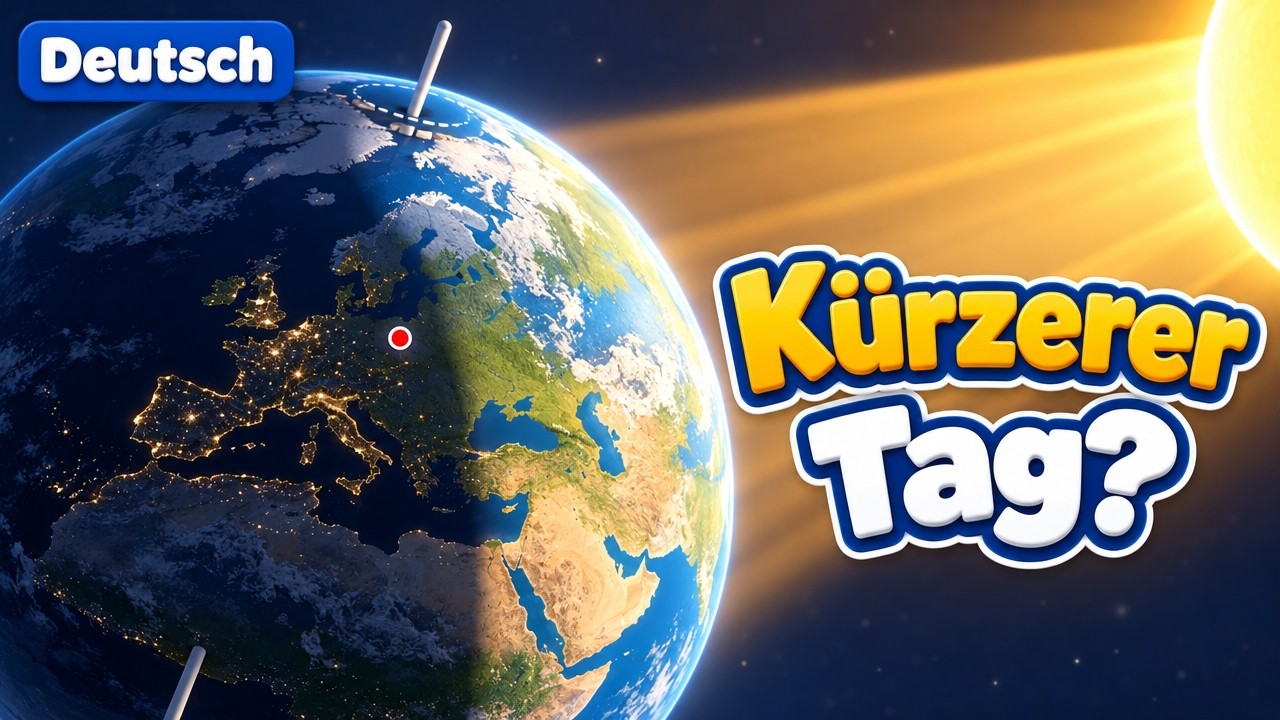
Warum geht die Sonne im Winter in Polen später auf und früher unter? Dieses neugierige, rhythmische Kinderlied zeigt, wie die Neigung der Erdachse Polen weniger Zeit im Sonnenlicht lässt. Ein einfaches Modell mit Lampe und Globus hilft, Tag, Nacht und den von der Erde aus gesehenen Sonnenweg zu verstehen.
Maja schaltet den Fernseher ein und entdeckt, wie ein Signal Pixel und Lautsprecher steuert. Das Lied erklärt, wie rotes, grünes und blaues Licht Farben bilden, warum schnell wechselnde Standbilder wie Bewegung wirken und wie die schwingende Lautsprechermembran die Luft bewegt.
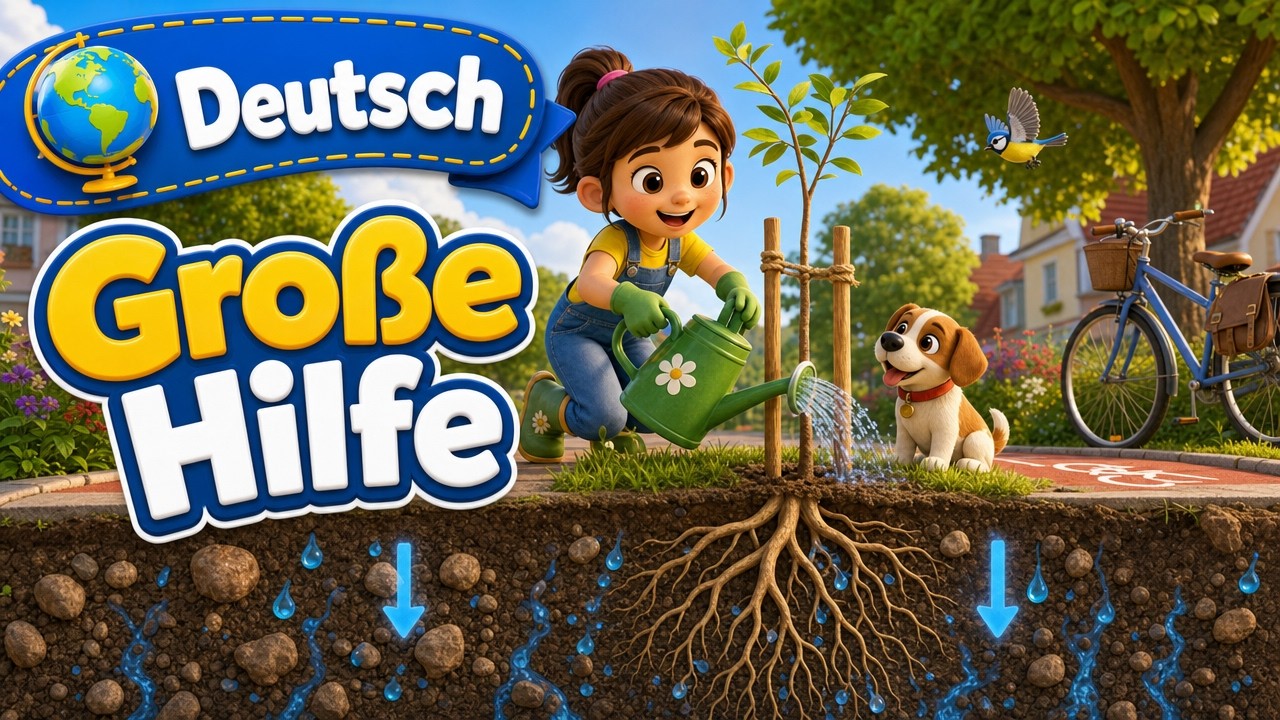
Ola und ihr Hund entdecken, warum es unter einer Baumkrone kühler ist und wie Bäume Menschen und Tieren helfen. Das fröhliche Kinderlied erklärt außerdem Blätter, Sauerstoff, Wurzeln und Regen und zeigt, dass ein Setzling einen passenden Platz, Wasser, Schutz und viel Zeit braucht.

 2:23
2:23